Ex-Muslim Explains
Why Progressive Islam Doesn't Work | Ex-Muslim Explains
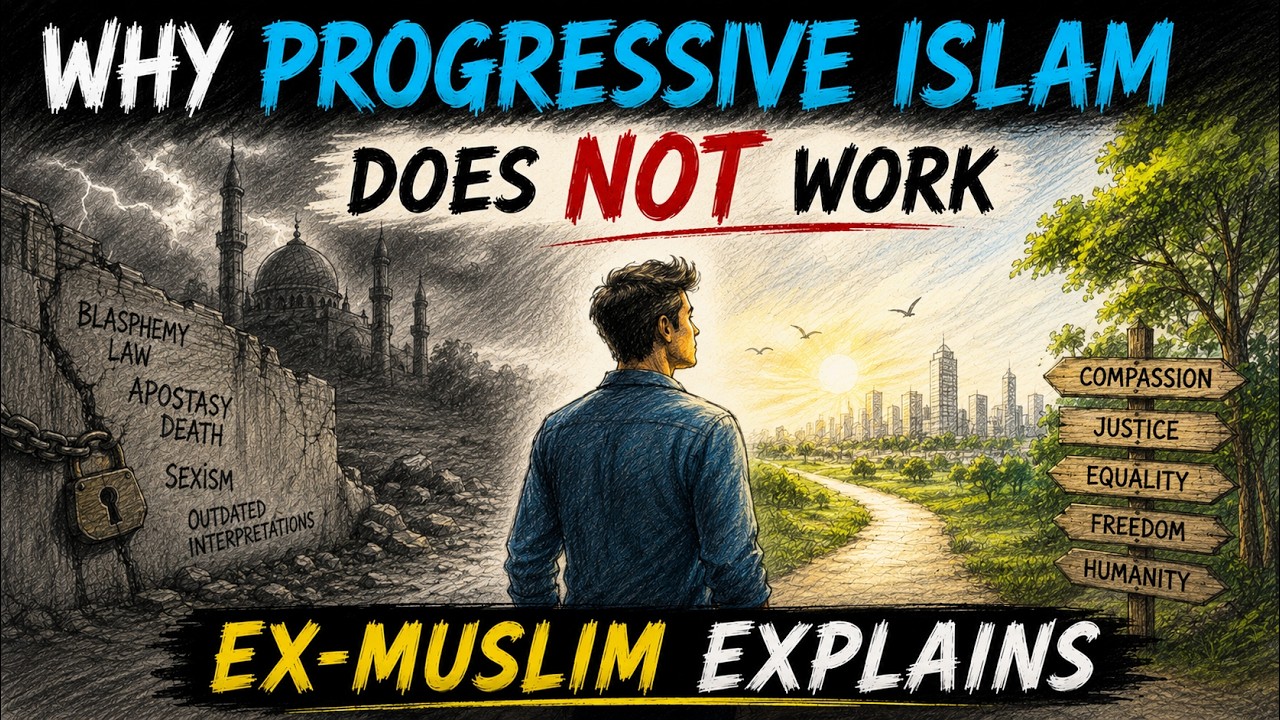
Progressive Muslims think they’re modernizing Islam. They think they’re building a bridge to the future. But there is a reason fundamentalists aren't stopping them, and why ex-Muslims are watching them in horror.
In this video, we break down progressive Islam from a critical ex-Muslim perspective. From its modern origins to its fundamental theological paradoxes, we analyse why progressive apologetics crumbles under classical scrutiny, why fundamentalists secretly tolerate it as PR cover, and why it actively undermines human rights movements in the modern world.
| 0:24: For a millennium, Islamic scholars felt no need to justify traditional rulings on slavery or women's rights because they were confident in divine authority.
| 1:01: With the onset of globalization, the conflict between divine legal codes and modern secular ethics created a crisis. Early modernists began framing modern concepts (like democracy and consent) as ideas that Islam actually pioneered, creating an "apologic narrative" that many modern Muslims now believe as historical fact.
| 2:16: Progressives use metaphors and context to reinterpret explicit verses, but in doing so, they dismiss the classical scholars who actually preserved the tradition.
| 3:19: This creates a paradox: progressives rely on the Arabic lexicons and biographies compiled by the very scholars they now dismiss.
| 3:51: This destroys the premise of divine revelation; if the people closest to Muhammad misunderstood the message, the claim that the Quran is "clear" is invalidated.
| 5:01: Why fundamentalists tolerate progressives. Strategic "PR cover."
| 5:39: By presenting a liberal image to the world, progressives shield orthodox Sharia from global scrutiny. Fundamentalists wait for a "state of authority" to reassert control.
| 6:12: Examples of "society regression," where geopolitical or natural shocks lead populations back to fundamentalism:
| 6:34: Afghanistan (1960s/70s vs. Taliban).
| 6:49: Iran (pre-1979 Revolution).
| 7:12: The Maldives (post-2004 tsunami), where disaster was framed as divine punishment for abandoning "true" Islam.
| 7:44: Egypt (post-1967 Six-Day War), where the collapse of secular nationalism allowed the Muslim Brotherhood to grow.
| 9:03: Ex-Muslims view Islam as a 7th-century human construct. Progressive "sanitization" of the text prevents society from honestly acknowledging and moving past problematic foundations.
| 10:37: The "Hadith reliability trap," where progressives accept narrations that sound modern but dismiss those that don't, undermining the credibility of the entire system of transmission.
| 11:23: Progressives often ignore "abrogation" (the principle where later verses supersede earlier ones), which is central to classical Islamic law.
| 11:49: Conclusion: progressive Islam only exists because of global secular buffers. If those buffers fail, progressives would be persecuted as heretics by the same fundamentalists they currently coexist with.
| 13:04: The example of "Aya," a Muslim mother on TikTok who advocated for feminist values.
| 13:29: When Aya began rejecting specific hadiths to reconcile her faith with feminism, she faced brutal backlash. The debate shifted from theology to harassment, resulting in her being labeled an apostate and doxed, which created physical safety risks for her and her child.
| 14:03: When modern ethics clash with explicit religious texts, one must eventually choose between secular morality and the classical texts.
| 14:27: Progressive Islam helps fundamentalists by providing a "protective cover" for the religion's image, but harms them by acting as a "gateway to apostasy" for those who begin questioning the system.
| 15:17: Progressive apologists invalidate the struggles of "closeted" ex-Muslims. While progressives may claim that legal persecution is "not real Islam," for many, these are immediate human rights emergencies involving the loss of family, citizenship, or life.
| 16:03: Progressive Muslims should stop defending a "medieval framework" and instead join ex-Muslims in addressing root causes.
| 16:25: ex-Muslims do not seek to destroy personal belief in God, but rather to "neutralize the texts" that justify executing apostates, misogynistic laws, and hostility toward LGBTQ+ individuals.
| 16:51: Muhammad should be viewed as a historical figure "frozen in his time" rather than an infallible moral template. Anchoring ethics in universal human dignity, rather than ancient codes, is the only way to permanently lock out fundamentalism.